Overview
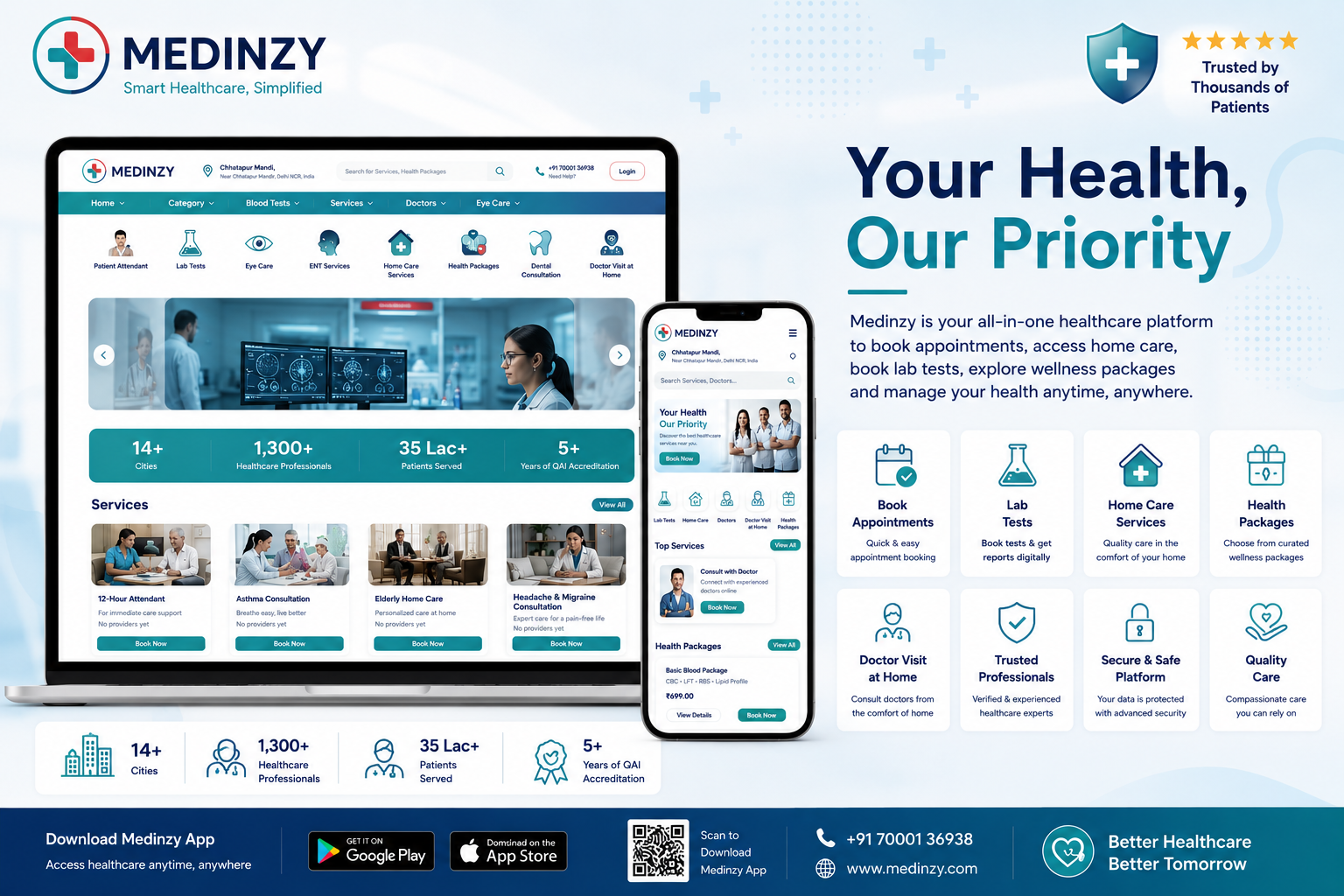
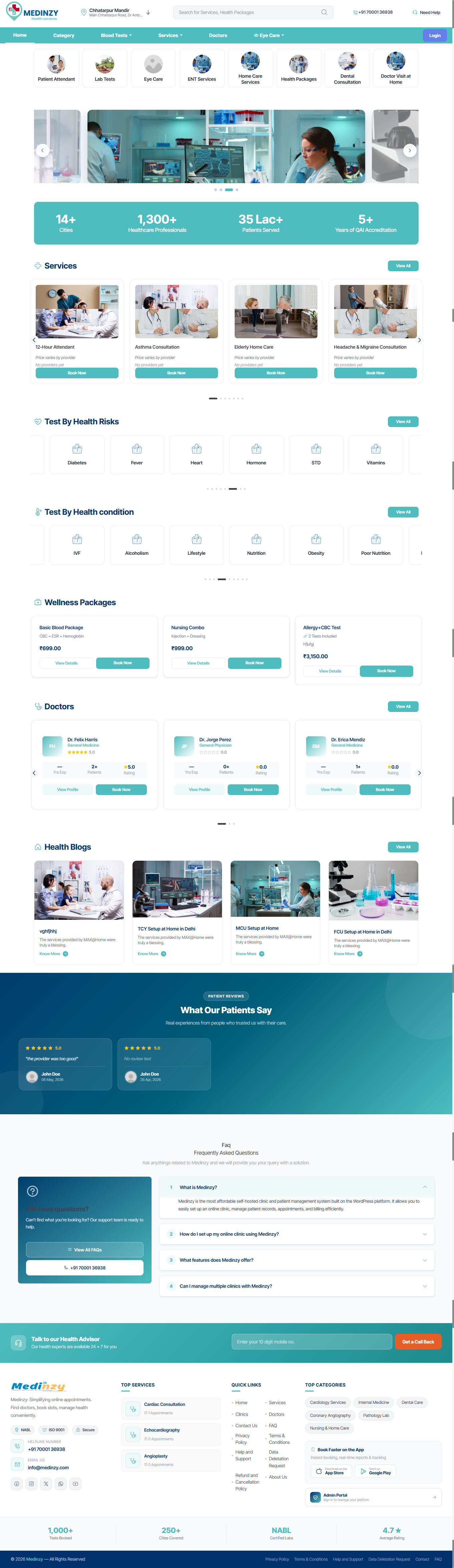
Medinzy is a cloud-based healthcare management platform built by Darwinbark for clinics and independent doctors who were still running their patient workflow on paper and phone calls. The platform digitises the entire patient-to-doctor journey - from the first appointment booking to the final digital prescription - inside a single, multi-clinic system.
[SCREENSHOT: Medinzy dashboard - doctor appointment calendar view]The Problem
Before Medinzy, the clinics we worked with were dealing with the same recurring set of problems that most small-to-mid-size healthcare providers face:
- Patients had no self-service way to book an appointment - every booking went through a phone call to the front desk, which meant missed calls turned into missed patients.
- Doctors had no digital view of their own schedule. Availability lived in a physical register, so double-bookings and last-minute clashes were common.
- Prescriptions were handwritten. Pharmacies routinely misread handwriting, and patients had no reliable copy of their own prescription history.
- Clinic admins had no reporting - no way to see patient volume, doctor utilisation, or no-show rates without manually counting paper files.
- Patients received no reminders, so no-show rates were high and clinics lost revenue on empty slots that could have gone to someone else.
None of these problems are unique to one clinic - they are the default state of a healthcare business that has grown past what a notebook and a landline can manage.
The Solution
Darwinbark built Medinzy as a cloud-based, multi-tenant healthcare management platform that digitises the entire patient-to-doctor workflow in one place. Rather than bolting a booking widget onto an existing paper process, Medinzy was designed so that every step of a patient's visit - discovery, booking, consultation, prescription, and follow-up - happens inside the same system, with each role (patient, doctor, clinic admin) getting a purpose-built interface.
[TIMELINE: add project start/launch dates and major milestones here]
Technology Stack
- Backend: Laravel (PHP) - handles authentication, appointment logic, prescription records, and the multi-clinic data model.
- Frontend: Vue.js - powers the interactive booking calendar, doctor dashboard, and real-time schedule updates without full-page reloads.
- Notifications: Firebase Cloud Messaging (FCM) - delivers real-time push notifications to doctors and patients (new booking, upcoming appointment, prescription ready) alongside SMS and email.
- Database: MySQL - relational schema modelling clinics, doctors, patients, appointments, and prescriptions with clear foreign-key relationships between each.
Architecture
Medinzy is structured around four core entities that everything else hangs off: Clinics, Doctors, Patients, and Appointments. A clinic can have many doctors; a doctor has an availability schedule that drives which appointment slots are bookable; a patient can book across multiple clinics; and every appointment links forward to a prescription record once the consultation is complete.
On the backend, Laravel's queue system handles anything that shouldn't block the request-response cycle - reminder SMS/email dispatch, FCM push delivery, and report generation all run as background jobs so the booking flow itself stays fast for the patient tapping through on their phone.
On the frontend, Vue.js drives the doctor's schedule view and the patient booking calendar as reactive components, so a doctor blocking out unavailable time, or a patient picking a slot, updates instantly without a page reload - important on a flow where every extra second of friction is a patient who abandons the booking.
[SCREENSHOT: Patient-facing appointment booking flow]Database Architecture
The schema is built to keep clinic data isolated while sharing the same application: every doctor, patient, and appointment record carries a clinic reference, so reporting and permissions can be scoped per clinic without duplicating the codebase per customer. Key relationships:
- clinics → doctors (one-to-many): each clinic manages its own roster of doctors and their individual availability windows.
- doctors → appointments (one-to-many): a doctor's calendar is simply their appointments joined against their availability schedule.
- patients → appointments (one-to-many): a patient's full visit history is queryable across every clinic they've used.
- appointments → prescriptions (one-to-one): each completed appointment can produce exactly one digital prescription, keeping the patient's medical record chronological and auditable.
Features
- Online appointment booking & management, with real-time slot availability
- Doctor profile & availability management, including recurring schedules and blocked-out time
- Digital prescription system, replacing handwritten prescriptions with a searchable patient record
- Patient health records, viewable by the patient and any doctor they've consulted within the same clinic network
- Admin dashboard for clinic management - patient volume, doctor utilisation, and no-show reporting
- SMS & email notifications for booking confirmation and appointment reminders
- Push notifications via Firebase Cloud Messaging for real-time doctor and patient alerts
Challenges Solved
Replacing a phone-based booking habit. Clinics worried patients - particularly older ones - wouldn't adopt a self-service booking flow. The interface was kept deliberately simple: pick a doctor, pick a date, pick a slot, confirm. No account setup required to browse availability, which lowered the barrier for first-time bookings.
Doctor schedule conflicts. Because doctor availability and booked appointments live in the same data model, double-booking became structurally impossible rather than something caught after the fact - the booking UI simply never renders a slot that's already taken or outside the doctor's declared availability.
Illegible, unsearchable prescriptions. Moving prescriptions into a structured digital record meant pharmacies no longer had to interpret handwriting, and patients gained a permanent, searchable history of what they'd been prescribed and when - useful for both the patient and any doctor treating them later.
Visibility for clinic admins. Before Medinzy, clinic owners had no way to answer basic questions like "which doctor is busiest" or "what's our no-show rate" without manually counting paper files. The admin dashboard turns that into a live report.
Result
Clinics using Medinzy reduced appointment no-shows by 40%, eliminated paper prescriptions entirely, and reported a significantly improved patient experience - patients could now book, get reminded, and receive their prescription record without a single phone call to the front desk.
[SCREENSHOT: Doctor's digital prescription interface] [SCREENSHOT: Clinic admin reporting dashboard]Gallery
Related Case Study